



As companies push for sharper outcomes from their events, advances in AI and extended reality (XR) are becoming central to how event planners measure engagement, training gains and overall impact.
By Janice Alyosius
As hybrid events mature and corporates increasingly demand measurable outcomes, the MICE sector is shifting towards deeper technology integration and sharper performance metrics. Event planners no longer rely on intuition; instead, they look for quantifiable engagement levels, competency gains, networking efficiency and return on investment visibility. Sector experts indicate that the next two years will see AI and XR move from experimental add-ons to essential tools across corporate events, business meetings and MICE planning.
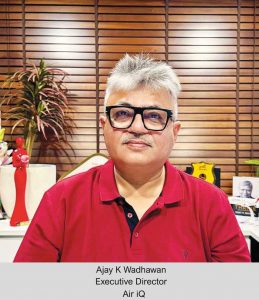
Ajay K Wadhawan, Executive Director, Air iQ, believes engagement metrics remain the strongest predictor of event success. “The measure of attendee engagement should be gauged by participation throughout the event. Metrics such as attentive attendance tell us whether the event has truly worked.” He stressed that well-mixed session formats, relevant content and careful speaker selection influence participation. Networking efficiency, he added, depends heavily on user-friendly meeting apps — the higher the number of meetings, the greater the networking.
Wadhawan sees XR and AI as transformative for RoI, particularly in corporate capability-building and training-led business events. “XR solutions can improve competency levels by around 50 per cent and reduce training time by almost 69 per cent,” he noted. While the cost of AI-driven learning solutions may be higher initially, Wadhawan believes they deliver long-term value through reduced downtime, faster skill development and lower operational losses.
Data integration is becoming central to how MICE planners forecast outcomes and demonstrate business value. Air iQ deploys its own registration technology, supported by a dedicated travel subsidiary offering negotiated rates, in-house hotel contracting and externally managed engagement tools aligned with HR and administrative teams. This integrated approach enables a single predictive view of event performance rather than fragmented data streams.
Looking ahead to 2026, Wadhawan expects AI to function as an end-to-end planning engine, delivering instant recommendations on destinations, accommodation categories, transport logistics, scheduling, meal plans and engagement formats. He added that AI will also optimise expense management while improving connectivity and virtual participation experiences. As technology advances, post-event evaluation is expected to become increasingly automated, enabling event professionals to track impact with far greater precision than ever before.