


Delhi’s announcement of hosting 30 major cultural events in just 80 days marks an unprecedented creative push — one that promises global visibility but also raises crucial questions.
By Janice Alyosius
Delhi government’s recent announcement of hosting over 30 major cultural events in just 80 days marks the city’s most ambitious entertainment push in recent years. The line-up, spanning Travis Scott to Zakir Khan, signals a clear attempt to reposition the national capital as a global creative powerhouse. Backed by the Delhi Government, the Event and Entertainment Management Association (EEMA) and PHD Chamber of Commerce and Industry (PHDCCI), the initiative aims to amplify tourism, energise the local economy and project renewed cultural confidence.
However, the scale of the plan raises fundamental questions. Does Delhi currently have the infrastructure, logistical capacity and regulatory ease required to support a festival calendar of this magnitude? While the government is signalling readiness through improved venues and streamlined support, industry stakeholders remain cautiously optimistic. Their concerns centre on infrastructure gaps, licensing complexity, traffic management and the shortage of purpose-built entertainment arenas — all critical factors if Delhi is to emerge as India’s Creative Capital.
 Rekha Gupta, Chief Minister, Delhi, stated, “Delhi is now fully ready with world-class infrastructure, safety measures and logistical support to host these events seamlessly. With Modi Ji’s vision, Delhi is confidently moving from restrictions to opportunities and from obstacles to success.”
Kapil Mishra, Minister of Tourism, Art & Culture, Government of Delhi, added, “My mission is to bring world-class events to the city and firmly establish Delhi as a global creative capital.”
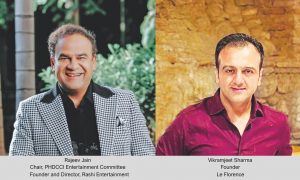
Rajeev Jain, Chair, PHDCCI Entertainment Committee, and Founder and Director, Rashi Entertainment, described the moment as a turning point. “Delhi is unlocking its full potential as a platform for the global entertainment economy. It is poised to become the epicentre of India’s culture and event-driven future,” he said.
Infrastructure and licensing
Industry voices stress that Delhi still has significant ground to cover. Highlighting infrastructure constraints, Nittin T Dubey, Founder, Seven Wonders Vacations, said, “We still lack the kind of arenas Delhi needs for large-scale events. There are only one or two major venues, and you cannot repeat every event at the same place.”
He also pointed to traffic congestion and licensing as persistent challenges. “Permissions from agencies like PPL and IPRS take time, and the costs are huge. These are private bodies, but the government must intervene. For 30–35 events, we need streamlined permissions and better systems,” Dubey said.
Better planning
Offering a counterview, Vikramjeet Sharma, Founder, Le Florence, said Delhi already has a strong foundation, provided planning is meticulous. “Delhi certainly has the infrastructure — stadiums, arenas and heritage monuments. What we need is careful planning so that heritage sites are protected, and traffic is managed well.”
On licensing, Sharma argued that Delhi is ahead of many states. “Delhi already has a clear structure with DCP one-stop licensing, but if the government can bring all permissions — police, fire, Novex, PPL and IPRS — into a true single-window system, it will remove a huge amount of stress for organisers,” he said.
He also stressed the need for stronger government coordination during large concerts. “When Diljit performed at JLN, traffic was jammed for hours. That is not on the organiser. Traffic management is a government responsibility if Delhi wants to be a concert capital.”
With India’s live events market booming, driven by young consumers with higher spending power, industry leaders agree that the potential is significant. Whether Delhi can claim the title of Creative Capital will depend on how the next 80 days test its infrastructure readiness, regulatory coordination and ability to deliver seamless large-scale experiences.