

Technology is no longer a prop in events, it has taken the main stage, blurring the lines between hybrid and traditional events by measuring both tangible and intangible value. With rising expectations and diversified formats, India’s MICE future lies in blending physical experiences with digital intelligence to maximise impact across every touchpoint.
By Janice Alyosius
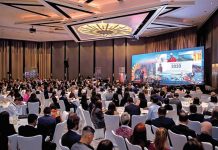
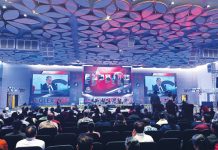
India’s MICE market is undergoing a paradigm shift, where technology and event design converge to influence how venues, hotels, and convention centres gauge true RoI. This infusion is not just enhancing operations, it is sparking a surge in hybrid events and experiential formats that are giving a new direction to the future of events.
What began as a pandemic-driven necessity has now matured into a strategic layer of event design, prompting the industry to rethink ‘profitability’ beyond traditional occupancy, room nights, and F&B revenue. Today, digital reach, content life cycle, and engagement depth increasingly shape RoI conversations for event planners.
The question now is: Will hybrid events completely eclipse traditional ones as we enter 2026?
According to experts, while physical events remain the backbone of human connection and commercial networking, organisers and venues are recalibrating for an environment where one format no longer fits all. The emerging consensus is apparent that the most successful events, whether hybrid, experiential, or traditional, are those that deliver long-term brand equity, repeat business, and measurable engagement. The MICE ecosystem is now evaluating both tangible and intangible value with equal weight.
New definitions of ROI
Hybrid and experiential events have moved far beyond stopgap solutions. They now serve as scalable platforms that enhance content distribution, broaden access, and extend event life cycles. Venues are increasingly integrating technologies like real-time analytics, audience tracking, and digital content monetisation into their RoI frameworks. For hotels and convention centres, profitability today includes engagement per minute, cost per virtual attendee, and post-event traffic on digital channels.
Lakshmi Sridhar, General Manager, Novotel Visakhapatnam Varun Beach and The Bheemili Resort Managed by Accor, said, “Hybrid and experiential events deliver higher long-term RoI by driving multi-channel engagement, creating valuable content, and fostering repeat business. Beyond revenue, we evaluate metrics such as cost per attendee, F&B contribution, and digital reach. Today, meaningful engagement and lasting brand recall are just as critical as direct profitability.”
Traditional meetings
Despite rapid digitalisation, in-person events are far from obsolete. The return of large-scale exhibitions, congresses, and corporate incentive gatherings signals the enduring value of face-to-face networking. Industry leaders highlight that physical experiences continue to drive client loyalty, long-term partnerships, and higher on-ground spending.
Sudeep Sarcar, CEO, India Exposition Mart Limited (IEML), echoes this sentiment. “Hybrid events were the need of the hour during the pandemic when physical gatherings were restricted. But MICE is majorly about human connection, meeting people, sharing ideas, and creating experiences together.”
At IEML, RoI extends far beyond yield. “We measure RoI not just by occupancy or revenue per event but by brand recall, client retention, and the long-term partnerships that physical experiences nurture.”
Yield & engagement
Hotels and venues are increasingly blending traditional financial metrics with digital performance indicators. Yield per delegate, engagement scores, and utilisation rate of non-traditional spaces (rooftops, lawns, breakout zones) are becoming central to profitability. Experiential events, in particular, offer opportunities for premium pricing and customisation.
Arjun Baljee, Founder, ICONIQA, and President, Royal Orchid Hotels, highlights this shift. “Hybrid and experiential events drive higher engagement and brand recall, translating into repeat bookings and premium pricing. We evaluate profitability through yield per delegate, space utilisation, F&B contribution, and digital reach metrics, ensuring that every experience delivers measurable RoI.”
Revenue lens
Unlike traditional MICE formats measured on direct financial outcomes, hybrid events introduce parallel revenue streams including virtual sponsorships, cross-platform branding, and paid access to post-event digital content. This has led to new operational models in hotels that now design events for both physical and virtual scalability.
Highlighting that the profitability equation has fundamentally widened, Sumit Periwal, Director, Summit Hotels & Resorts, said, “Traditional formats are measured on direct financial metrics such as room nights, F&B revenue, and space utilisation. With hybrid events, the equation expands as we look at digital reach, virtual sponsorships, and post-event content value,” he explained.“Experiential events are niche and more of long-term investments in brand and client relationships. The yardstick for RoI now includes revenue per available event space, GOP per event, digital engagement rates, and client retention.”
Investing in Technology
As event organisers embrace live streaming, advanced AV, AI-driven analytics, and content libraries, the definition of RoI now spans both audience scale and data depth. Hybrid formats are particularly effective in reaching cross-border participants, creating subscription opportunities, and reducing carbon footprints — an increasingly relevant metric for global corporates. Jibak Dasgupta, Director General and CEO, IMTMA and BIEC, said the shift is structural. “Audio-visuals, live streaming, and content monetisation have become increasingly popular. Hybrid events are gaining momentum after the pandemic, allowing organisers to reach out to a broader audience across different locations.” He noted that both formats hold unique strengths. “Traditional conferences demand physical presence, and networking provides a different experience compared to hybrid events. It is essential to evaluate each event’s RoI based on the tangible and intangible value it creates.”
Purpose-led formats
Experts agree that the future of MICE lies in purpose-led event design, as no single format can fully replace the other. The format of the event is going to be based on audience, objective, sustainability, and required engagement depth.
As India’s MICE sector navigates rising expectations, sustainability mandates, and diversified event models, RoI can no longer be measured by a single metric or a singular format.
The future belongs to venues and organisers who can blend physical experiences with digital intelligence, maximising value across every touchpoint from registration to post-event content consumption.